

Lessons from Minneapolis
Building on Trust as Civic Infrastructure, and what that actually looks like in action
Recently, I wrote about trust as civic infrastructure, not just a feeling, but the quiet, load-bearing stuff that lets people actually do things together. Trust is the first muscle we flex when things get weird. It’s what lets people move before they have all the facts, before there’s a plan, sometimes before anyone even knows what’s coming next.
If trust is the infrastructure, then Minneapolis is where I’m getting my education right now.
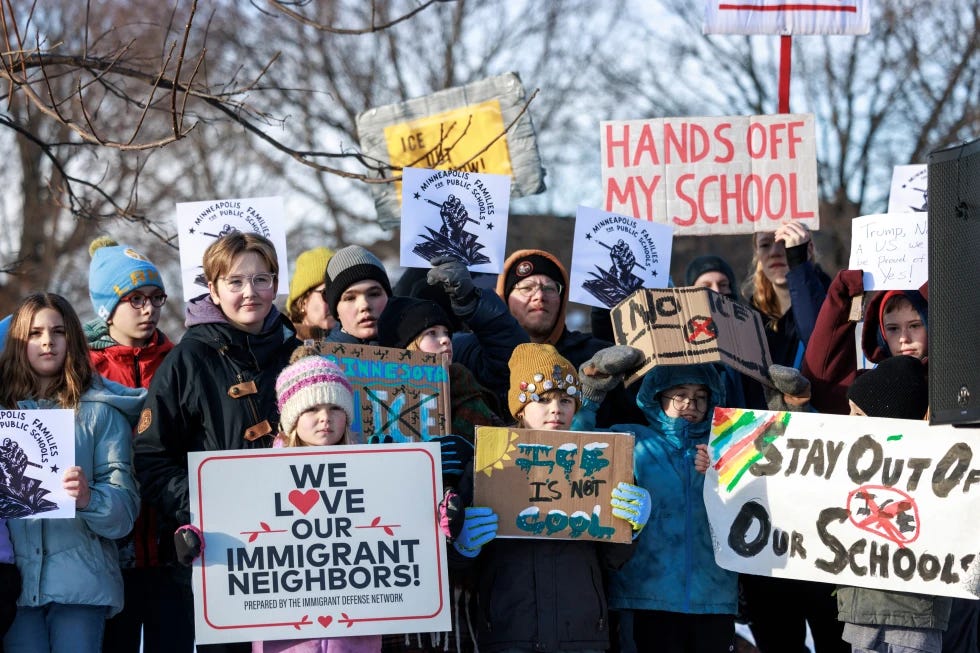
The last few months, I’ve watched my city respond to uncertainty in ways that are messy, human, imperfect, and honestly, pretty eye-opening. These aren’t the kind of lessons you read about. They’re the kind you pick up when people are scared, institutions are stretched thin, and neighbors have to decide whether to step in or just hope someone else will.
Here’s what’s standing out to me from Minneapolis right now.
1. Trust travels faster through relationships than through institutions
When the ICE occupation began, official information moved slowly. Rumors moved quickly. But relationships; real, lived, neighbor‑to‑neighbor relationships — moved fastest of all.
A single text could ripple across a block in minutes.
A knock on a door could calm a family faster than any press release.
A shared Signal thread could correct misinformation before it took root.
This is the first lesson: trust doesn’t scale through hierarchy, it scales through proximity.
And when trust is already present, people don’t wait for permission to act.
2. Micro‑moves matter more than grand gestures
One of the wildest things about Minneapolis right now is how much adaptation is happening through tiny, almost invisible actions:
someone translating a legal update
someone offering a ride
someone walking with a neighbor who’s afraid
someone quietly tracking what’s real and what’s rumor
someone checking in on a family at 10 p.m. just to say, “You’re not alone”
None of these things are dramatic.
You won’t find them in any strategy document.
But together, they actually create momentum.
They make people feel safer.
They make it possible for people to keep showing up.
This is the second lesson: adaptation is built from small, distributed contributions, not heroic ones.
3. Clarity is a form of care
When things are uncertain, people don’t need perfect answers. They just need honest ones.
Minneapolis neighbors have been practicing this in real time:
“Here’s what we know.”
“Here’s what we don’t know yet.”
“Here’s what’s emerging.”
“Here’s what we’re watching.”
No spin. No sugarcoating. No false certainty.
This kind of clarity doesn’t make fear disappear, but it does make people feel less alone in it. It gives everyone the same picture of what’s real, and that’s what lets people actually work together.
This is the third lesson: naming what’s real is one of the most powerful forms of protection a community can offer.
4. Presence is its own kind of power
One of the most moving things I’ve seen is the rise of these “presence teams”—just small groups of neighbors who show up on a block where families feel vulnerable.
They don’t escalate.
They don’t confront.
They accompany.
Just being there changes the whole mood of a street. Suddenly fear turns into steadiness. Isolation turns into solidarity.
This is the fourth lesson: sometimes the most adaptive thing a community can do is simply not let anyone face uncertainty alone.
5. Adaptability is a collective practice, not an individual trait
If you look closely at what’s happening in Minneapolis, you’ll see something important: no one is doing this alone.
People are learning from one another.
Adjusting with one another.
Coordinating with one another.
Caring for one another.
Adaptation isn’t a personality trait.
It’s a relational one.
This is the fifth lesson: we adapt better together than we ever will alone.
Why these lessons matter
What’s happening in Minneapolis isn’t just a local story. It’s a preview of what a lot of communities might face as things get more complicated and institutions get stretched.
But it’s also showing us something hopeful:
Even when systems falter, people don’t.
They find each other.
They organize.
They protect.
They adapt.
Trust makes that possible.
Relationships make it durable.
Small contributions make it scalable.
Presence makes it human.
This is civic adaptability, not just as a concept, but as something people are actually living out.
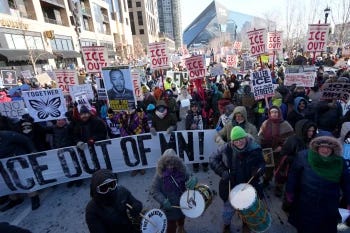
A Note to Minnesota
I love this place.
I love these people.
I love the way Minnesotans show up for one another when it matters.
Minneapolis isn’t perfect, no community is, but there is a kind of quiet, stubborn, deeply human resilience here that feels different from anywhere else. It’s in the way people shovel each other’s sidewalks without being asked. It’s in the way strangers become neighbors in a single conversation. It’s in the way we hold both grief and hope at the same time, without pretending one cancels out the other.
And in these recent months, I’ve watched something extraordinary happen:
Minnesotans choosing each other, again and again, even when things are hard.
I’ve seen people step outside on the coldest nights just to make sure a family felt safe.
I’ve seen group texts turn into lifelines.
I’ve seen people who had every reason to retreat instead lean in with courage, tenderness, and clarity.
I’ve seen alliances form across languages, cultures, and lived experiences, not because someone told them to, but because that’s who we are when the stakes are real.
There’s a particular kind of strength here, not loud, not flashy, not performative.
A strength made of presence.
A strength made of care.
A strength made of people who refuse to let fear have the final word.
Minnesota has always been a place where winter teaches us something about endurance, about interdependence, about how we survive by staying close. But this moment, this chapter, has shown me a deeper truth:
We don’t just survive together. We adapt together. We protect together. We become more human together.
So this is my thank you note to Minneapolis, and to Minnesota more broadly:
Thank you for your courage.
Thank you for your clarity.
Thank you for your generosity, your grit, your humor, your stubborn hope.
Thank you for reminding me, and reminding all of us, what community looks like when it’s alive and awake and choosing one another on purpose and with intention.
Whatever comes next, I believe in us.
I believe in this place.
And I believe in the way we move, not perfectly, but together.